Copper Lay-Down
Fence post mount
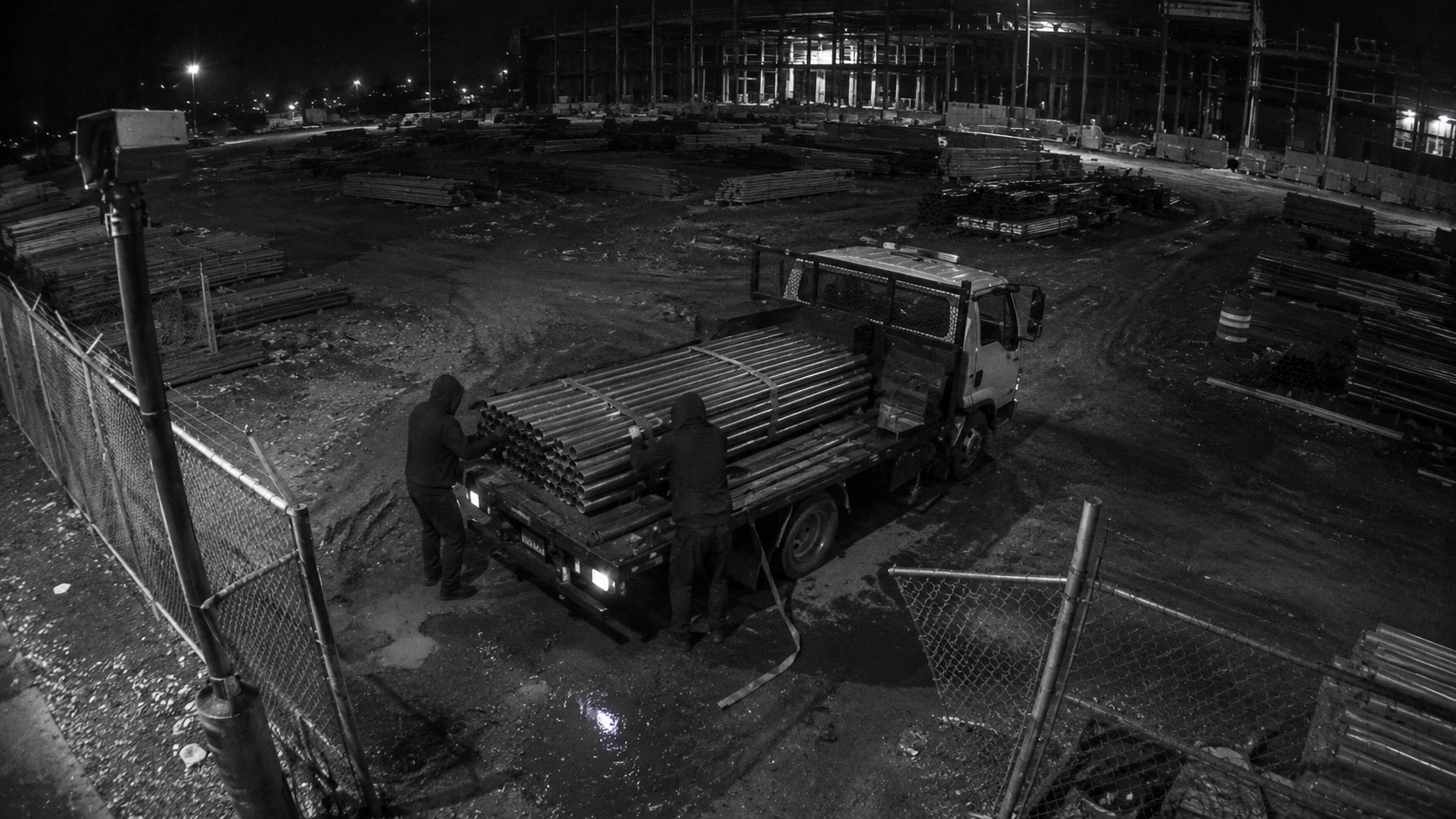
The #1 jobsite theft target by frequency. Staged outdoors because there is no warehouse, worth five figures a run, and gone in one night.
Weatherproof · solar + battery
Copper, fuel, generators, lumber, tools, and yellow iron. Active jobsites bleed material every night. Cameras catch silhouettes climbing the fence, then the GC eats the loss, the schedule slips, the GMP bleeds, and the next site goes through the same cycle. Digital Tripwire logs every device that came within 10 feet of every staged material pile, every piece of equipment, every trailer office.
An active jobsite is the most porous piece of real estate a contractor will ever own. The fence comes down for daily deliveries. Three subs and four sub-subs are on site at any given time, plus inspectors, surveyors, utility crews, and the occasional architect. Materials are staged outdoors because there is no warehouse. Equipment sits in place overnight because moving it costs money. The trailer office is a residential-grade plywood box. Cameras cover the gate and maybe two corners of the lot. They do not cover the staged copper run, the diesel tank, the generator pad, or the back of the building under construction.
The result is a chronic, six-figure-per-site theft pattern the GC absorbs as overhead. Every loss event slows the schedule, eats the contingency, and bleeds the GMP. The owner blames the GC. The GC blames the security vendor. The security vendor points at footage showing a silhouette climbing a fence at 2:14am. Nobody can produce evidence of who was actually on the site, and the case closes unsolved.
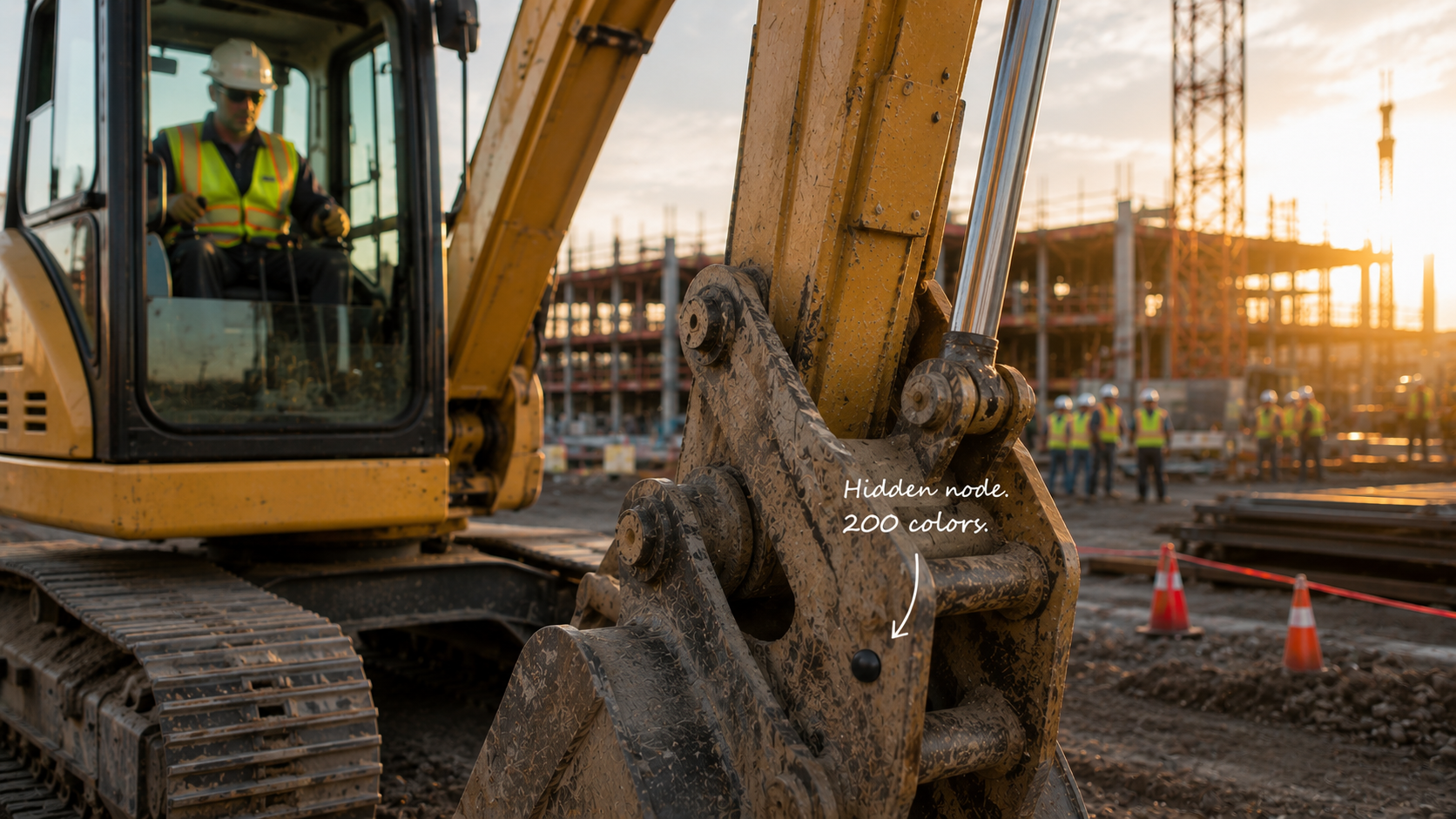

Digital Tripwire deploys with weatherproof solar-and-battery nodes mounted to fence posts, light poles, the trailer office, the laydown yard perimeter, and the equipment compound. Per-asset nodes hide inside heavy equipment battery compartments, generator housings, and tool conex containers. The deployment moves with the project: nodes pull off this site at substantial completion and redeploy on the next.
When a node detects motion or proximity, it scans every Bluetooth and Wi-Fi device within 10 feet and writes the result to a tamper-evident encrypted log. MAC address, signal strength, distance, timestamp. Uploaded over LTE-M cellular, independent of any site network. The crew that walked the perimeter Tuesday afternoon at lunch shows up again at 2am Friday: same device cluster, instant alert, prosecution package already building.
Strategic node placement covers the high-value, high-risk zones across an active jobsite. Weatherproof outdoor design, solar-and-battery powered, fully redeploys to the next project at substantial completion. Tap a node to see what it protects — or run the demo and watch a 2am copper pull get logged.
Fence post mount
The #1 jobsite theft target by frequency. Staged outdoors because there is no warehouse, worth five figures a run, and gone in one night.
Weatherproof · solar + battery
Inside the generator housing
Equipment and fuel theft. The generator is the one asset that is running, unattended, all night, every night.
Per-asset node · motion trigger
Inside the battery compartment
Yellow iron protection. A quarter of stolen equipment is ever recovered, and the node rides inside the machine rather than on the fence.
Per-asset node · multi-year cell
Inside the door frame
Power tools and consumables. The container everyone has a key to, which is exactly the problem.
Access log · crew attribution
Inside the door frame
Plans, financials, petty cash. A residential-grade plywood box holding the project’s paperwork.
Door frame · after-hours entry
Inside the tank skid
Off-site siphoning detection. Diesel walks by the drum and never shows on a camera worth watching.
Siphon event · skid mount
Floor mount inside the structure
MEP and fixture theft. Once the shell is up, the most valuable material on site is inside a building with no doors yet.
Interior mount · MEP protection
Inside the gate post
Perimeter entry and exit logging. The fence comes down for deliveries every day, which makes the gate the one honest chokepoint.
Entry/exit log · delivery window
Nobody cuts a fence at 2am on a site they have never seen. The reconnaissance happens in daylight, during a delivery window, inside the crowd of subs and sub-subs and inspectors who belong there. A camera cannot tell the difference between a legitimate visitor and a crew casing the copper run, because on camera there is no difference.
The device cluster is the difference. The same phones that walked the laydown yard during Tuesday's delivery window are the phones standing at the copper pile Friday at 2:14am. One visit looks like nothing. Two visits, connected by a hash-signed proximity record, is a documented pattern with intent attached to it.

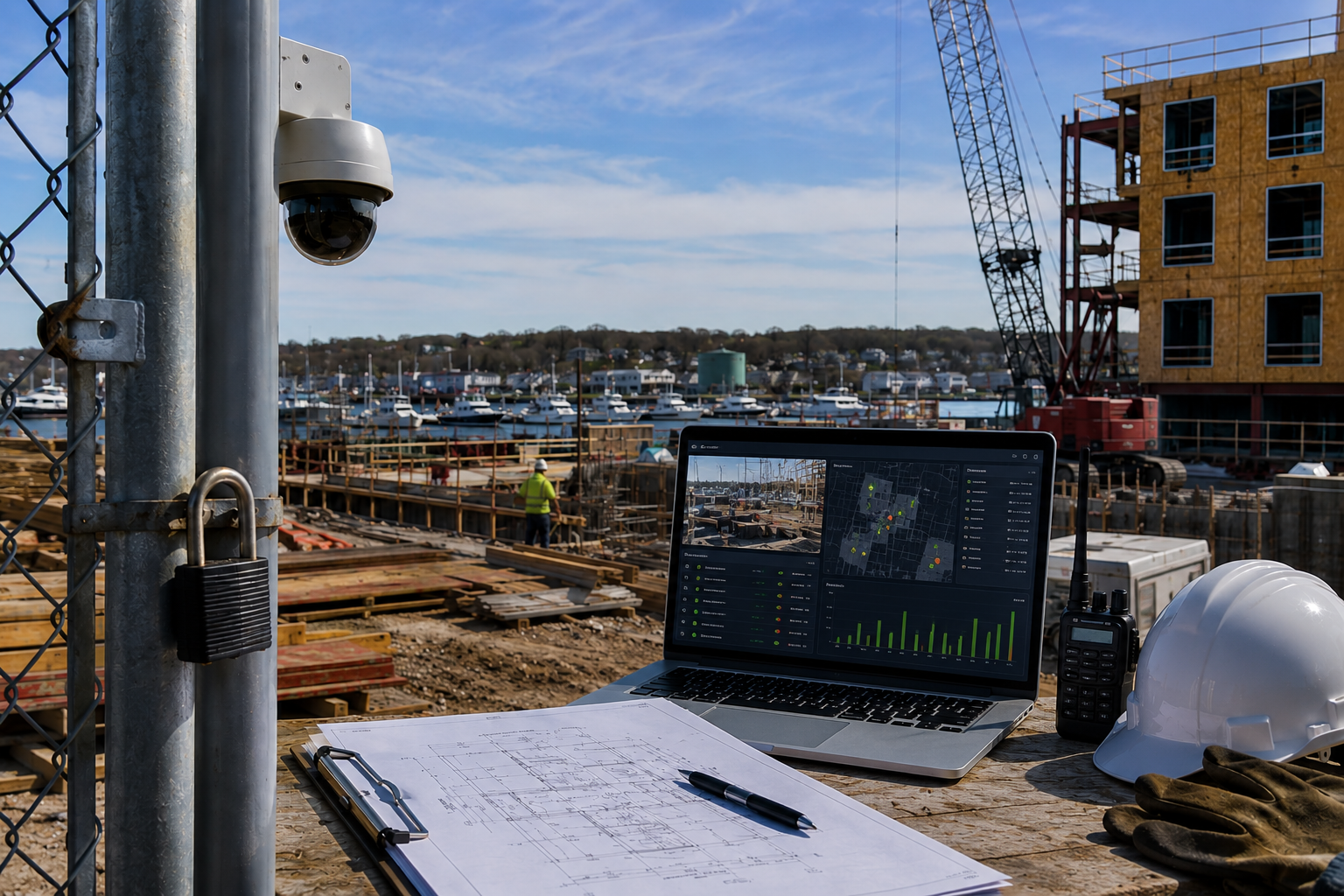
The badge fence and the camera at the gate work fine for keeping out the random opportunist with a bolt cutter. They are useless against the threat that actually drives most of the loss: a sub-sub crew member who walks off with a saw at the end of his shift, a delivery driver who short-counts the lumber pallet on a Friday, a foreman who logs an extra 200 feet of copper that never showed up, or a sub who substitutes inferior material and pockets the difference. Cameras catch everyone walking on and off the site. They have no way to identify which one of the forty-eight crew members today walked out with the missing tools.
Digital Tripwire fills that gap. The proximity log shows every device present at every material delivery, every conex access, every after-hours entry, and every staged-material disturbance. Cross-references against the sub sign-in sheet, the badge access log, and the delivery manifest. When the cycle count comes up short, you have a device-level record of who was within ten feet of the loss event, plus the same MAC pattern surfacing at your other active sites where the same sub is working.
Builder's risk carriers, OCIP underwriters, and CCIP underwriters all reward documented physical security. The GC that can produce per-site chain of custody records on every theft event gets better coverage, better deductibles, and faster claim resolution. The GC that can't gets carrier non-renewal when claim activity spikes, and that translates directly into bid disqualification on future projects because owners require coverage as a precondition.
Digital Tripwire produces tamper-evident, timestamped, exportable proximity logs in CSV and JSON with full chain of custody. Every loss event ships with a hash-signed forensic packet designed for builder's risk carriers, NICB construction submissions, prosecution, and OSHA incident review.
Your loss documentation goes from "we think the copper went missing Sunday night" to "here is exactly when, here is the device cluster on the site, and here is the cross-site pattern that connects this case to two others on our portfolio in the last six weeks."
We asked former FBI forensics investigators, federal prosecutors, and family court judges. They'd never seen BLE proximity data used as evidence. Until now.



No. Digital Tripwire is a forensic evidence layer that runs alongside existing jobsite security. Cameras, perimeter fencing, badge access, and security guards continue to do what they do well. Digital Tripwire fills the gap they cannot fill: device-level identification of who was actually present at every staged material pile, every piece of equipment, and every after-hours theft event, plus cross-site pattern matching across the GC's project portfolio.
Outdoor fixed nodes use a weatherproof solar-and-battery design with multi-week battery autonomy in low-light conditions, so even an extended cloudy stretch does not interrupt operation. Per-asset nodes inside equipment, generators, and conex containers use multi-year primary cell batteries and trigger on motion. Communication is LTE-M cellular, which has significantly better building and metal-skin penetration than standard LTE. The node ecosystem is engineered specifically for the harsh, network-free, weather-exposed reality of an active jobsite.
The system captures MAC address, signal strength, and timestamps in a non-residential, fenced, video-monitored, OSHA-controlled commercial workspace where workers already operate under documented monitoring frameworks. The data does not capture identity, content, or personal information, and the proximity log has practical investigative value only when correlated with a security event. Standard signage and sub onboarding language are provided as part of deployment to ensure clear disclosure to all workers on site.
Tamper events are themselves logged. Removing a node, blocking its signal, or attempting to disable it generates an immediate alert with the timestamp and device list at the moment of tampering. Logs are uploaded over LTE-M and stored off-site, so they cannot be deleted by anyone with site access or trailer-office access. The system is designed under the explicit assumption that the threat may include workers on site, which is appropriate for a vertical where a meaningful share of loss is internal.
Nodes are designed to redeploy. At substantial completion, the field team pulls the nodes, the hub, and any per-asset units. The system reconfigures for the next site footprint and is operational within hours of arrival on the new project. The same proximity database carries forward, which means cross-site MAC pattern matching gets stronger with every project added to the GC's portfolio. This is fundamentally different from a hard-wired camera system that has to be re-engineered at every new site.
GC and developer deployments are designed for portfolio-wide rollouts, which is where the cross-site pattern matching value compounds. Each active site gets a hub and a node kit sized to the project footprint and risk profile. Hubs auto-provision over LTE-M on first power-up. No site-level IT involvement required. Most GC pilots are 2-3 active projects for 60-90 days, with cross-site pattern matching enabled, then a phased rollout across the active portfolio.
Project pricing scaled to site count. Pilot 2-3 active projects in 60-90 days. Per-asset proximity evidence, cross-site pattern matching, builder's risk and NICB ready export packages, prosecution-grade chain of custody.
Request a Site Pilot