Trailer Cargo Door
Inside the rear cargo door
Primary cargo theft target. The trailer sits in unmonitored space every layover, and the door is the one thing that has to open for the load to leave.
Motion trigger · 3–5 yr cell
Your GPS shows the truck moved. It can't tell you who got in. Your dashcam covers the cab, not the trailer. Your yard cameras cover the gate, not the back of row 14. Digital Tripwire logs every device that came within 10 feet of your asset, no matter where it sat overnight.
Every existing fleet security tool tells you something happened. None of them tell you who did it. GPS tracks the asset. Dashcams cover the cab. Yard cameras cover the gate. The trailer-side, the toolbox, the equipment hauler, the back of the cube van all sit in unmonitored space every night, every weekend, and every layover.
Modern cargo theft is organized. Crews scout high-value loads using public freight visibility tools, identify the layover stop, and hit it when the driver is off-duty. Service vans get hit overnight at the contractor's home and at jobsites. Same pattern: cameras catch the silhouette, they cannot identify the people.
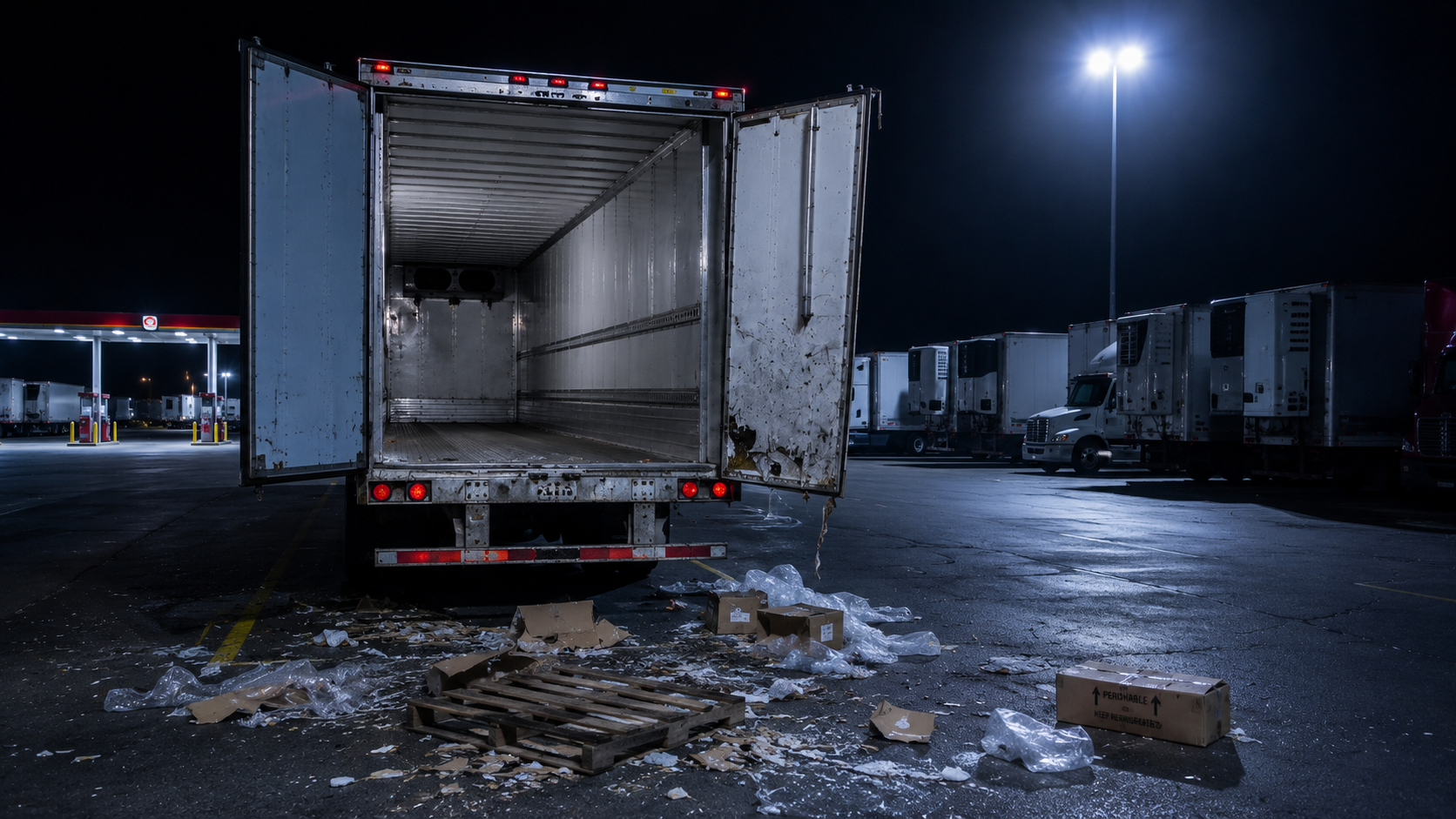
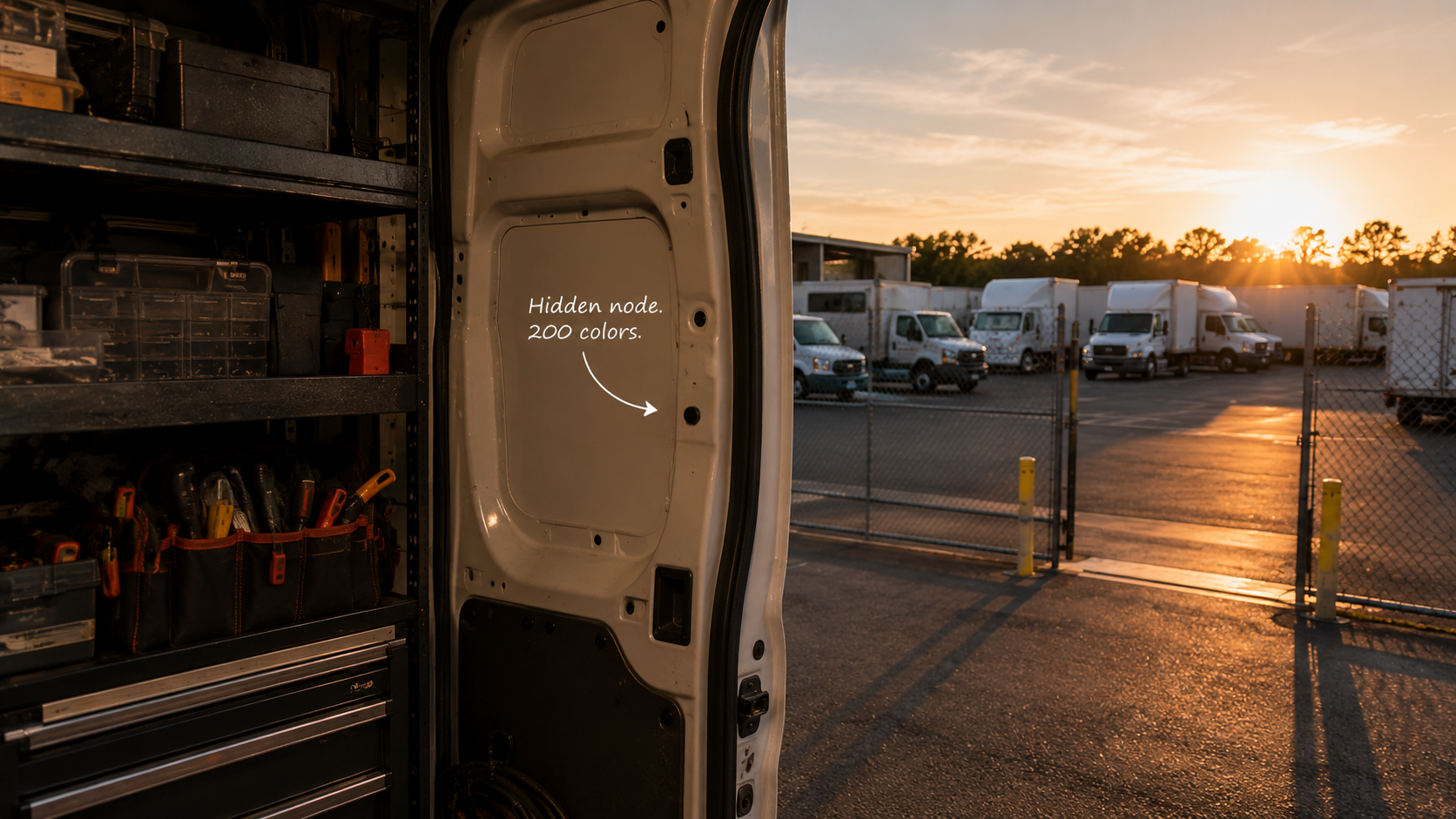

Digital Tripwire nodes deploy inside trailer cargo doors, mounted to interior toolbox lids in service vans, hidden in heavy equipment battery compartments, and at fixed positions inside the yard, the maintenance bay, the dispatch office, and the fuel island. The nodes run on multi-year batteries and trigger on motion, so they do not drain truck or equipment electrical systems.
When a node detects motion or proximity, it scans every Bluetooth and Wi-Fi device within 10 feet. MAC address, signal strength, timestamp. Uploaded over LTE-M cellular from anywhere on the road. The crew that walked the yard Tuesday afternoon shows up at 2am Friday: same device cluster, instant alert, prosecution package already building itself.
Strategic node placement covers the high-value, high-risk zones across over-the-road, last-mile, service, and equipment fleets. Per-asset nodes for mobile units, fixed nodes for the yard and dispatch infrastructure. Tap a node to see what it protects — or run the demo and watch a 3am trailer breach get logged.
Inside the rear cargo door
Primary cargo theft target. The trailer sits in unmonitored space every layover, and the door is the one thing that has to open for the load to leave.
Motion trigger · 3–5 yr cell
Inside the locking toolbox
Tool theft on contractor vans. Lower dollar per event, far higher frequency, and every hit costs a day of billable work.
Toolbox mount · per-van node
Inside the battery compartment
Yellow iron jobsite theft. Under a quarter of stolen equipment is ever recovered, and the node rides inside the machine.
Per-asset node · multi-year cell
Inside the cargo box
Last-mile and rental fleet protection. High turnover, many drivers, and nobody who knows every face in the yard.
Cargo box mount · last-mile
Inside the gate housing
Surveillance runs and scouting. Crews walk the yard in daylight before they ever come back at night.
Gate log · scouting detection
Inside the bay frame
Vehicles in service and shop tooling. The one place every asset in the fleet eventually sits unattended with the doors open.
Shop tooling · service window
Inside the pump housing
Fuel theft and fuel card fraud. Diesel walks by the tankful and reconciles as a rounding error.
Fuel event · card correlation
Under the desk
Load assignments and inside-job documentation. Organized cargo theft needs to know which trailer holds the pharma load.
Load assignment · collusion signal
Read the GPS trace on its own and nothing is wrong. Departed the DC at 22:10. Pulled into the truck stop at 23:40. A brief movement event at 03:14 that reads as a driver shifting position or a yard jockey. Arrived at the receiving DC at 06:20, on time. Every telematics dashboard in the country would call that a clean run.
The proximity layer reads the same night differently. Driver's device cluster only, all night, until 03:14 — when three unrostered clusters stand at the cargo door for four minutes. Same timestamp. Same asset. The GPS knew the trailer moved. It could never say who moved it.
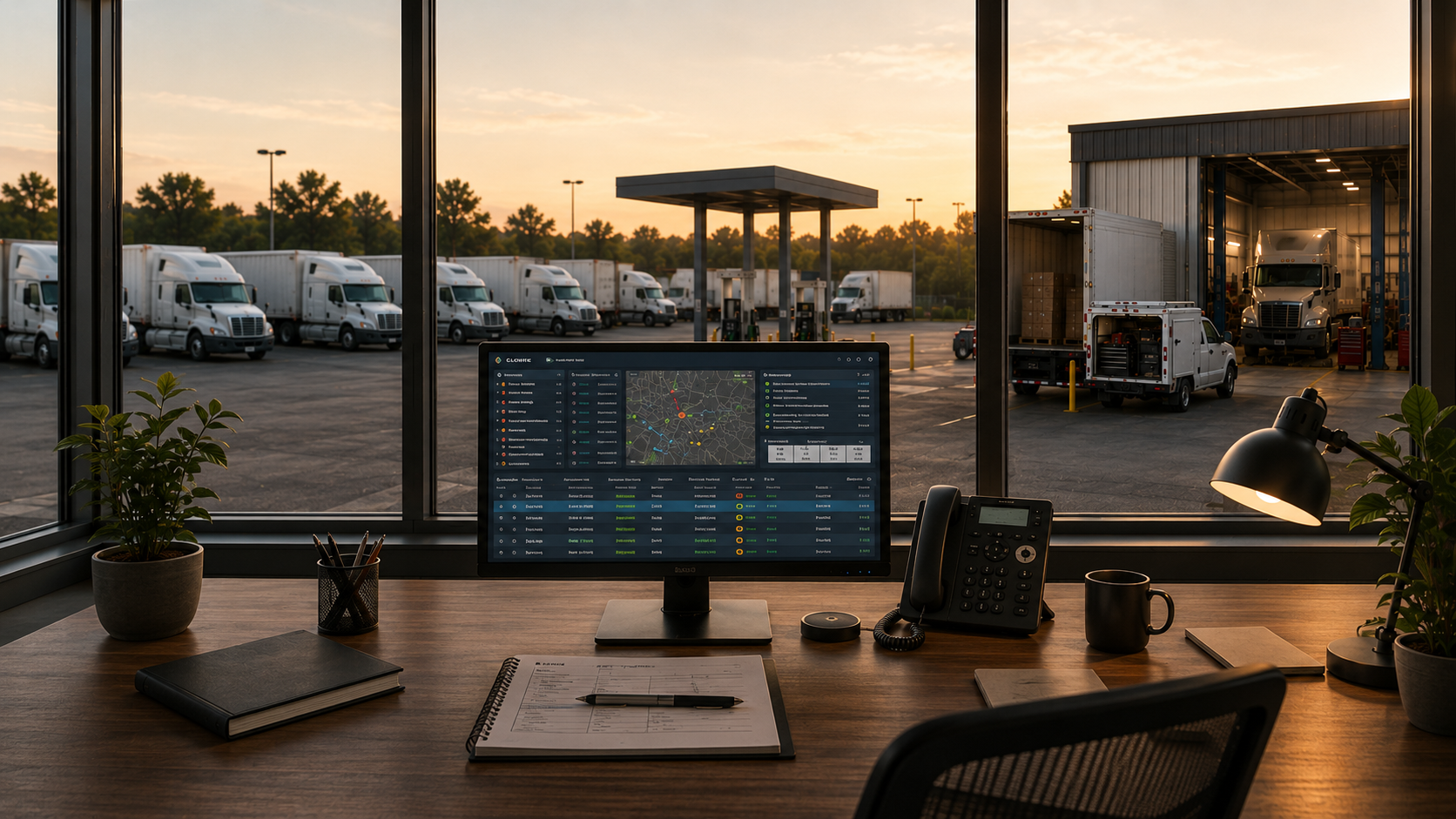
Motor truck cargo policies, equipment crime carriers, and fleet liability underwriters reward documented physical security. The carrier that can produce per-asset chain of custody on every loss event gets better coverage, lower deductibles, and faster claim resolution. The carrier that can't gets a non-renewal letter when claim activity spikes.
Digital Tripwire produces hash-signed, prosecution-grade export packages on every event. CSV and JSON, chain of custody complete, designed for cargo insurance submissions, NICB, FBI cargo theft task forces, and CargoNet investigators. The same evidence package that defends against a fraudulent claim accelerates the legitimate one.
We asked former FBI forensics investigators, federal prosecutors, and family court judges. They'd never seen BLE proximity data used as evidence. Until now.



No. Digital Tripwire is a forensic evidence layer that runs alongside existing fleet management systems. GPS, ELD, dashcams, and telematics platforms continue to do what they do well, which is track vehicles and manage operations. Digital Tripwire fills the gap they cannot fill: device-level identification of who was actually present at the asset at the moment of a loss, plus cross-fleet pattern matching for organized crews working a region or a corridor.
Trailer-mounted nodes run on multi-year primary cell batteries (typically 3-5 years) and trigger on motion, so they consume power only during disturbance events. They do not draw from the truck or trailer electrical system. For communication, the node uses LTE-M cellular, which has significantly better building and metal-skin penetration than standard LTE. In dense urban tunnels or extremely remote areas, the node stores scan data locally and uploads when signal is restored. The data is never lost.
Modern phones do randomize the MAC address they broadcast to unknown networks, but in proximity scanning the device still emits identifiable beacons, and most people carry secondary devices — smartwatches, earbuds, fitness trackers, fobs — that emit consistent identifiers. Pattern matching is built around the full device cluster a person carries, not a single MAC. The combination of multiple device signatures plus temporal and cross-location correlation produces a forensic-grade identifier that stands up even where a single phone rotates its MAC.
Tamper events are themselves logged. Removing a node, blocking its signal, or attempting to disable it generates an immediate alert with the timestamp and device list at the moment of tampering. Logs are uploaded over LTE-M and stored off-site, so they cannot be deleted by anyone with fleet network access or yard physical access. The system is designed under the assumption that the threat may include personnel with administrative access, which is appropriate for a vertical where internal collusion drives a meaningful share of large cargo theft events.
Yes. Service contractor fleets, plumber and HVAC fleets, electrical contractors, and small last-mile operations are some of the strongest use cases. The economics are different from OTR cargo — lower per-event dollar amount, much higher event frequency, much greater operational disruption per loss — but the value proposition is identical. Per-van toolbox nodes plus a yard hub at the contractor's home shop. Most small-fleet pilots are operational within a single day.
Enterprise fleet deployments are designed for full-fleet rollouts. Hubs auto-provision over LTE-M on first power-up. Per-asset nodes are installed during regular maintenance windows or shop visits, with no driver involvement required. Most pilots are 25-50 assets across the highest-loss tier (typically pharma, electronics, or food-grade trailers) for 60-90 days, then a phased rollout across the rest of the fleet.
Fleet pricing scaled to asset count. Pilot 25-50 assets in 60-90 days. Per-asset proximity evidence, cross-fleet pattern matching, FBI and NICB ready export packages, prosecution-grade chain of custody.
Request a Fleet Pilot