Cannabis Dispensary, Cultivation & Distribution

Three pounds gone
Tuesday night.
METRC says it was sold.
The audit says it wasn't.

State regulators require 24-hour video, badge access, and seed-to-sale tracking. None of those systems can identify the person who was actually inside the vault when three pounds disappeared. Digital Tripwire produces device-level proximity records that close the gap between METRC inventory, the camera footage, and the audit reality.

$33B
U.S. legal cannabis market size
$60–180K
Avg. dispensary annual shrink and diversion loss
85%
Of cannabis loss is internal, not external
100%
Of state programs require documented physical security
The Problem

Cameras watch the vault.
METRC tracks the inventory.
Neither catches the person.

Cannabis is the most heavily security-regulated commercial vertical in the country. Every state requires 24-hour video, alarm systems, badge access, vault specs, transport security, and a seed-to-sale tracking platform. Every successful operator deploys all of it. None of it identifies the person who was inside the vault when the discrepancy showed up in METRC.

Internal diversion is the dominant loss vector, well above external robbery. Vault and transport discrepancies between METRC inventory and physical count drive license-threatening regulatory inquiries. Cameras might capture the silhouette. They cannot produce the device-level evidence that closes the case, supports prosecution, or protects the license at the next state audit.

Cannabis dispensary vault with secured product
The Solution

Every vault, every room,
every bay logs who was there.

Digital Tripwire nodes deployed across cannabis regulated zones
The nodeHides in the vault door, the flower room, the packaging bench
Digital Tripwire hub logging nearby devices
The hubSits in the manager's office on USB-C power

Digital Tripwire deploys at the high-value, regulated zones across cannabis operations: dispensary vaults, registers, secure storage, cultivation flower rooms, processing labs, packaging stations, transport docks, and the back-of-house corridors where state inspectors look first during an unannounced visit. The deployment scales from a single dispensary to a vertically integrated MSO across multiple state programs.

When a node detects motion or proximity, it scans every Bluetooth and Wi-Fi device within 10 feet. MAC address, signal strength, timestamp. Uploaded over LTE-M cellular, independent of facility network or POS. The log cross-references against METRC adjustments, badge logs, and POS transactions. The vault discrepancy at 11:47pm has a device cluster attached to it. The audit no longer relies on whose word is more credible.

  • Per-vault, per-room, per-bay proximity logs with hash-signed timestamps
  • METRC, BioTrack, Leaf Data Systems audit-ready integration
  • Cross-facility pattern matching across MSO operations
Placement Guide · Interactive

8 spots across every
cannabis operation.

Strategic node placement covers the regulated zones across dispensaries, cultivation facilities, processing labs, and distribution operations. Designed for state regulatory audit readiness and METRC reconciliation. Tap a node to see what it protects — or run the demo and watch a vault variance get logged.

nodes sleep until touched · or tap one
FLOWER ROOM CULTIVATION · HARVEST · TRIM PROCESSING LAB EXTRACTION · BATCH YIELD PACKAGING STATION UNIT-COUNT RECONCILIATION DISPENSARY VAULT METRC · MOST REGULATED CASH ROOM ARMORED PICKUP BACK-OF-HOUSE COMPLIANCE STATION TRANSPORT DOCK MANIFEST · CHAIN OF CUSTODY RETAIL FLOOR POINT OF SALE · PUBLIC CUSTOMER ENTRY
Facility event log● LIVE
✓ 5A:C9:E1:44:B2:07 logged at 3 zones · 23:44–23:47 · 3 lb METRC variance · state audit packet exported
V

Dispensary Vault

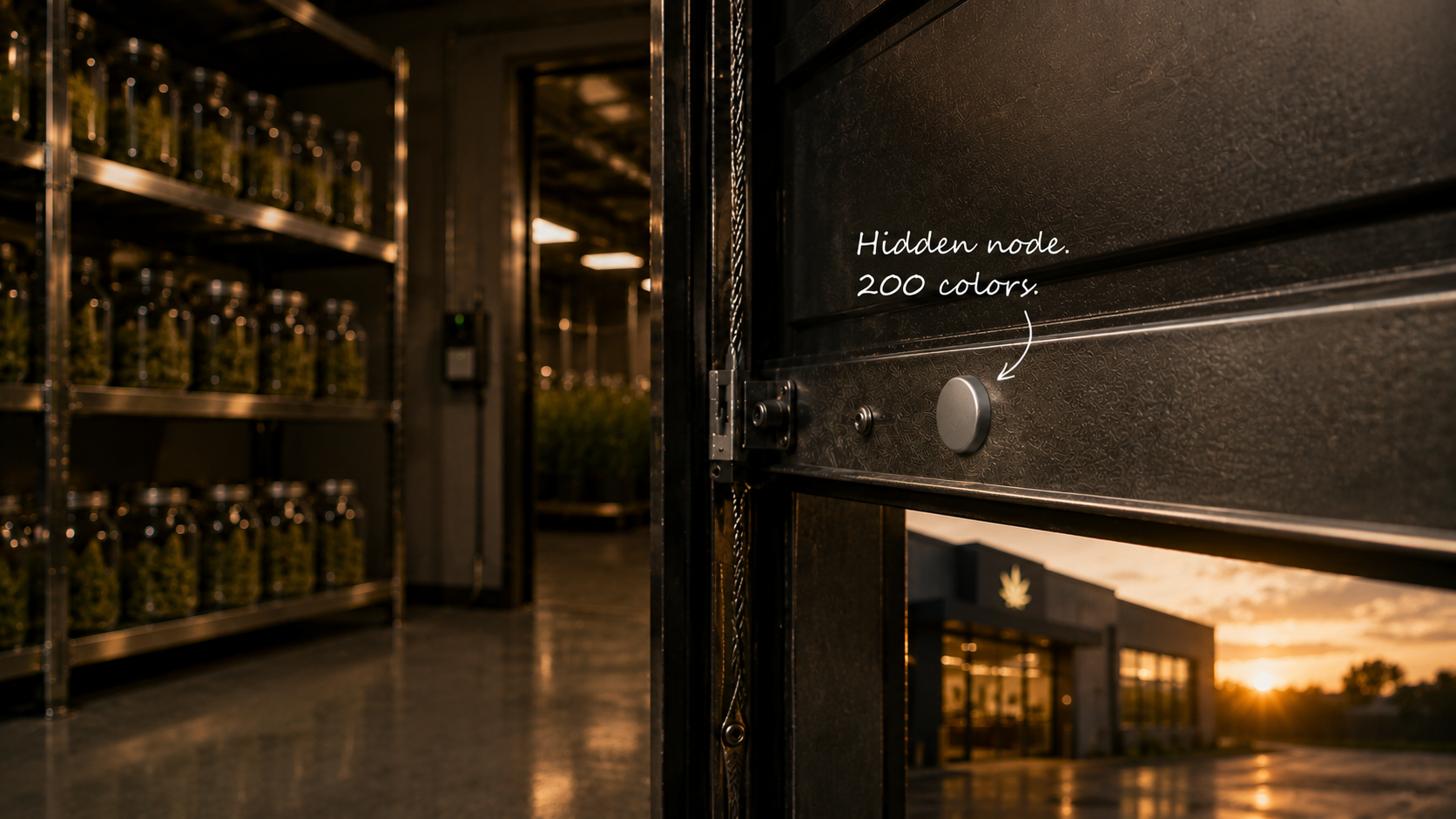
Inside the vault door

The most-regulated zone in the facility and the one METRC watches hardest. Every entry logged at device level, so the 11:47pm variance has a device cluster attached instead of a shrug.

METRC adjustment · per-entry ID
P

Point of Sale

Under the counter

Register transactions and manager overrides. The override that cleared at close has the devices that were standing at the terminal when it happened.

POS correlation · override log

F

Flower Room

Inside the cultivation door

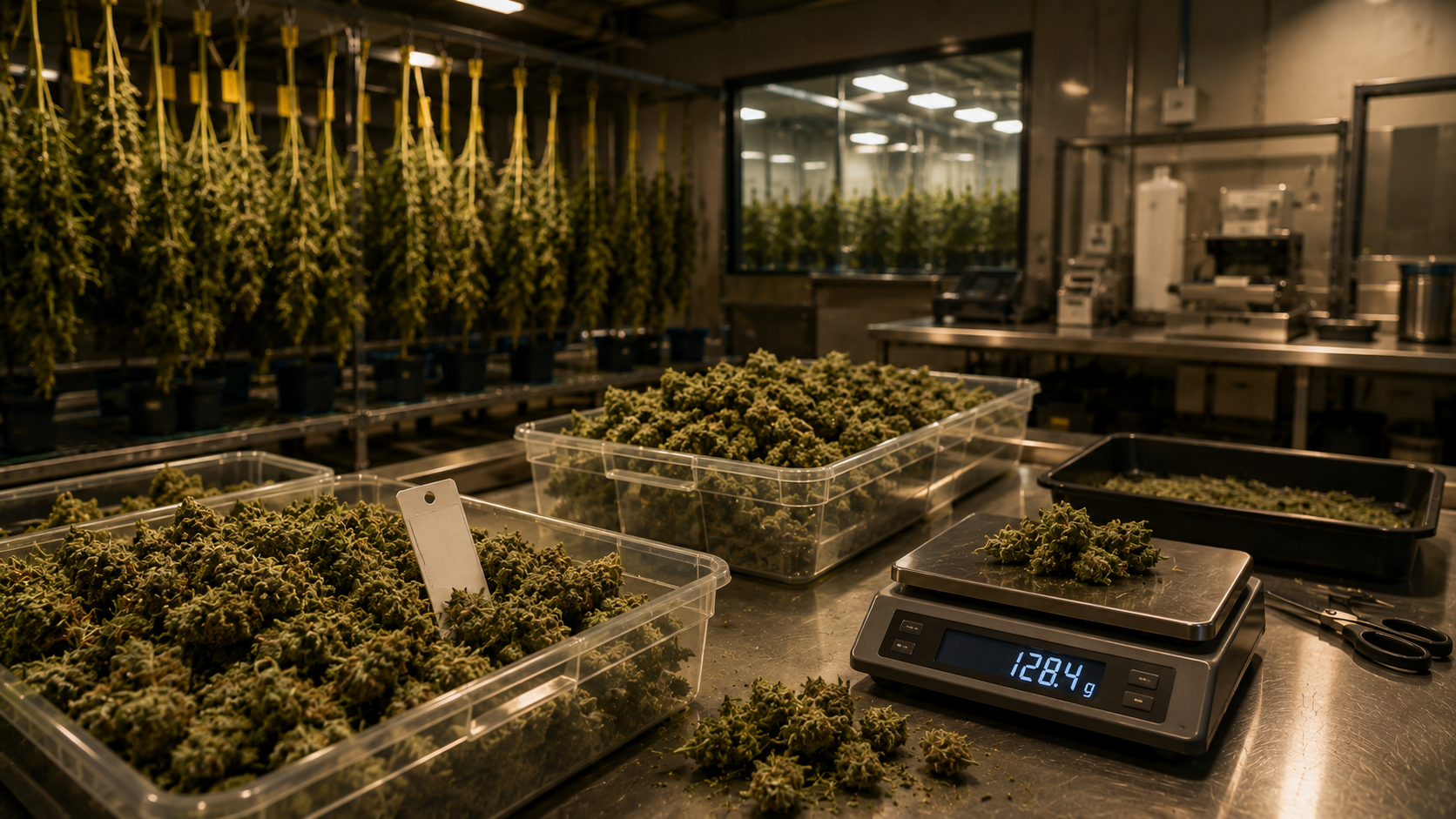
Harvest and trim windows are when wet weight is most subjective and least verifiable. The room logs who was in it during the count.

Harvest window · wet-weight event

L

Processing Lab

Inside the extraction frame

Batch yield reconciliation. Extraction is where input and output diverge on paper, and where a few points of yield disappear quietly.

Batch yield · extraction event

G

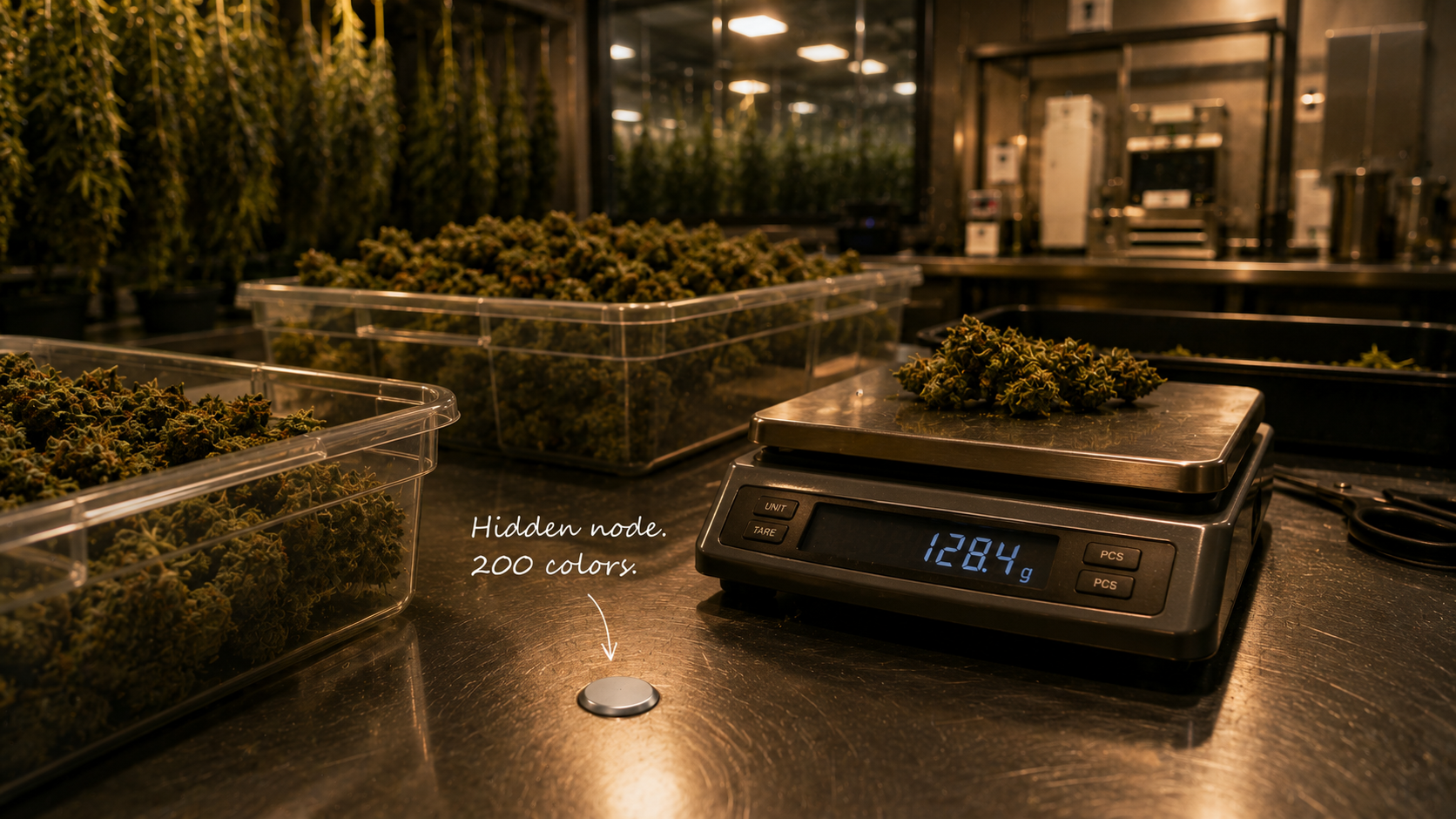
Packaging Station

Wall mount

Unit-count reconciliation. The gap between bulk weight and packaged units is the easiest place in the operation to skim.

Unit count · package event

T

Transport Dock

Inside the dock frame

Chain of custody between facilities. The manifest says what left. The node says who was at the bay when it did.

Manifest correlation · transfer chain

B

Back-of-House

Office corridor frame

The regulated facility footprint inspectors walk first. Everything that moves between zones crosses this corridor.

Transit chain · compliance station

C

Cash Room

Inside the vault frame

Cash counting and armored pickup. A cash-heavy, federally-unbanked industry makes this the second vault nobody talks about.

Count event · armored pickup

METRC Reconciliation & Internal Diversion

METRC tracks what was logged.
Digital Tripwire documents
who was standing there.

Cannabis cultivation harvest with METRC tags

Every state program mandates seed-to-sale tracking. METRC, BioTrack, or Leaf Data Systems. The platform records what was logged. It records nothing about who was actually present at each entry. Discrepancies between platform inventory and physical count are the single fastest path to a license-threatening regulatory inquiry.

External robbery makes the news. Internal diversion runs the spreadsheet. The experienced employee who knows the camera angles, the badge log gaps, and the audit cadence is the dominant loss vector. The proximity log surfaces the device-level patterns: the employee whose secondary device appears at the vault during three different unaccounted-inventory shifts, the driver whose phone cluster correlates with two separate manifest discrepancies.

  • METRC adjustment-event correlation with hash-signed proximity log
  • BioTrack and Leaf Data Systems compatibility
  • Multi-state MSO cross-facility reconciliation
Vault reconciliation · 30-day window · device cluster 5A:C9:E1:44:B2:07 RECONCILING
ShiftMETRC loggedPhysical countVarianceDevices at vault
Tue 23:471,240 g1,104 g −136 g3 present · 1 unrostered
Fri 22:12980 g896 g −84 g2 present · 1 unrostered
Tue 23:581,410 g1,258 g −152 g4 present · 1 unrostered
Three shifts · three variances · one device in commonTotal unaccounted 0 g
⚑ The same unrostered device cluster was at the vault for all three variance events — hash-signed, timestamped, exportable on state regulator request.
State Regulatory & License Compliance

Built for every state
cannabis framework.

Every state cannabis program has its own regulatory body, security requirements, and audit cadence. The published frameworks cover video, badge access, vault construction, transport, employee disclosure, and incident reporting in granular detail. None currently mandate device-level proximity logs. Most are starting to recommend them.

Digital Tripwire is engineered to satisfy the spirit and letter of every state framework. Deployment is a supplement to existing video, not a replacement. Hash-signed proximity logs survive regulator request, license renewal review, and post-incident investigation.

METRCBioTrackLeaf Data Systems CCC / DCC / CRC / OCMMED / LCB State License RenewalLocal AHJ
State cannabis regulatory documentation
EVENT #8545
triggerheartbeat
devices3
time02:14:07Z
sha256: a91f…c27e
EVENT #8546
triggermotion
devices7
time02:31:44Z
prev: a91f…c27e
sha256: 4be2…91aa
EVENT #8547
triggertaken
devices2
nearest4 ft · -35 dBm
prev: 4be2…91aa
sha256: f30c…d881
EXPORT
formatCSV / JSON
custodyverified
integrity✓ intact
chain of custody: complete
AES-256 encrypted before transmission
Hash-chained, tamper-evident logs
Court-ready chain of custody export
Validated by former FBI, prosecutor & judge
Expert Validation

What actually holds up
in court?

We asked former FBI forensics investigators, federal prosecutors, and family court judges. They'd never seen BLE proximity data used as evidence. Until now.

Nizar Balil

Nizar Balil

Former FBI & Interpol Digital Forensics Investigator. 20+ years in digital evidence analysis and courtroom testimony.
VERIFIED EXPERT
Lisa Pyle

Lisa Pyle

Former NYC Criminal Prosecutor & Federal Ethics Attorney
VERIFIED EXPERT
Marquis Jones

Marquis Jones

Former Family Court Judge & Deputy Attorney General
VERIFIED EXPERT
The Difference

Cameras & METRC vs.
Digital Tripwire.

Capability
Digital Tripwire
Existing Layer
Identifies devices, not silhouettes
METRC adjustment-event correlation
Hash-signed log
METRC entry only
Detects internal diversion patterns
Limited
Cross-facility MSO pattern matching
Independent of facility network / POS
LTE-M cellular
Requires network
Tamper-evident chain of custody
DVR can be wiped
State regulator audit-ready export
CSV / JSON + hash
Varies
Documents transport chain of custody
Manifest only
Retention
Cloud, indefinite
Typically 30–90 days
Operator FAQ

Common questions.

No. Digital Tripwire is a forensic evidence layer that runs alongside your existing state-required video, badge access, and alarm infrastructure. State cannabis programs mandate 24-hour video coverage with specific retention requirements (typically 90 days), and the system is documented as a supplement to that coverage, not a replacement. The proximity log fills the device-identification gap that video cannot fill, and the deployment is structured to strengthen your existing security stack during state audits.

Digital Tripwire integrates with state seed-to-sale platforms as an evidentiary feed, not a replacement. Proximity events are correlated against METRC adjustment events, plant tag updates, harvest weights, batch records, package events, and POS transactions to surface device-level patterns at every reconciliation point. The integration runs through your existing platform credentials and respects the state-mandated structure of the seed-to-sale system. No proximity data flows back into the seed-to-sale platform itself, which avoids any state regulatory question about the data architecture.

The system captures MAC address proximity, signal strength, and timestamps in a state-licensed, fully-monitored, badge-controlled commercial cannabis facility where every employee already operates under documented monitoring frameworks established by state regulators. The data does not capture identity, content, or personal information, and the proximity log has practical investigative value only when correlated with a security event, an inventory adjustment, or a regulatory inquiry. Standard signage and employee onboarding language are provided as part of deployment.

MSO deployments are designed for full-portfolio rollouts across cultivation, processing, distribution, and retail, which is where cross-facility pattern matching compounds. Each facility gets a hub and a node kit sized to the footprint and regulatory zone classification. Hubs auto-provision over LTE-M on first power-up. No facility-level IT involvement required. Most MSO pilots are 3-5 facilities in 2-3 state programs for 90-180 days with cross-facility pattern matching enabled, then a phased rollout across the portfolio. State-specific compliance documentation is provided for each program.

Yes. The same architecture supports federally-legal hemp operations under the 2018 Farm Bill, state-licensed cannabis operations, and the regulatory hybrid spaces in between. Hemp operations have lower mandatory security requirements than state cannabis but face the same internal diversion, transport, and chain-of-custody challenges. CBD wholesale and retail operations also benefit from the device-level proximity layer, particularly for high-value isolate, distillate, and finished product inventory.

Digital Tripwire is a security technology vendor, not a cannabis licensee, and the system architecture is designed to comply with all applicable federal, state, and local frameworks. Cannabis is federally illegal under the Controlled Substances Act, but state-licensed cannabis security infrastructure is broadly accepted as a category, and the major cannabis security and ancillary technology vendors operate openly across multiple state programs. Digital Tripwire deploys under the same legal posture as any other state-licensed cannabis security vendor, with documentation prepared for state regulatory review and contractor disclosure.

Pilot Digital Tripwire

Your license deserves
a witness.

Operator pricing scaled to facility count and state program. Pilot 1-3 facilities in 90-180 days. METRC reconciliation, internal diversion detection, transport chain of custody, state regulatory audit-ready export package.

Request a Cannabis Pilot